
Not every business website needs to be developed from scratch. In many cases, a website builder is a faster and more practical option, especially for small businesses, independent professionals, consultants, local service providers, and startup projects.
A custom website can be useful when a company needs complex functionality, unique integrations, or a large-scale digital product. But if the main goal is to present services, collect inquiries, publish basic content, and launch quickly, a website builder may be the better starting point.
Website builders reduce the technical barrier. They allow business owners to create a professional website without managing hosting, writing code, or hiring a full development team for every small change.
Why Businesses Choose Website Builders
The biggest advantage of a website builder is speed. A business can move from idea to live website much faster than with a traditional development process. Templates, ready-made blocks, built-in forms, mobile adaptation, and visual editing make the launch easier.
This is especially important when a company needs a website for a new service, local campaign, portfolio, event, or landing page. Waiting several months for a custom build is not always reasonable.
Website builders are also useful because they make future edits easier. Business owners can update text, replace images, add sections, change contact details, or publish new pages without asking a developer for every small task.
For many small companies, this flexibility matters as much as the initial launch.
Website Builders Are Not Only for Beginners
There is a common opinion that website builders are only for people with no technical background. This is not fully accurate.
A good website builder can also be useful for developers, marketers, designers, and agencies. It allows them to create simple business websites faster, test landing page ideas, prepare prototypes, or deliver projects with a smaller budget.
For example, a developer may still add custom logic around the website: online calculators, embedded forms, tracking, custom widgets, or third-party integrations. The builder provides the main structure, while additional tools make the website more functional.
This approach is often enough for service businesses that need a reliable online presence without unnecessary complexity.
uKit – Practical Website Builder
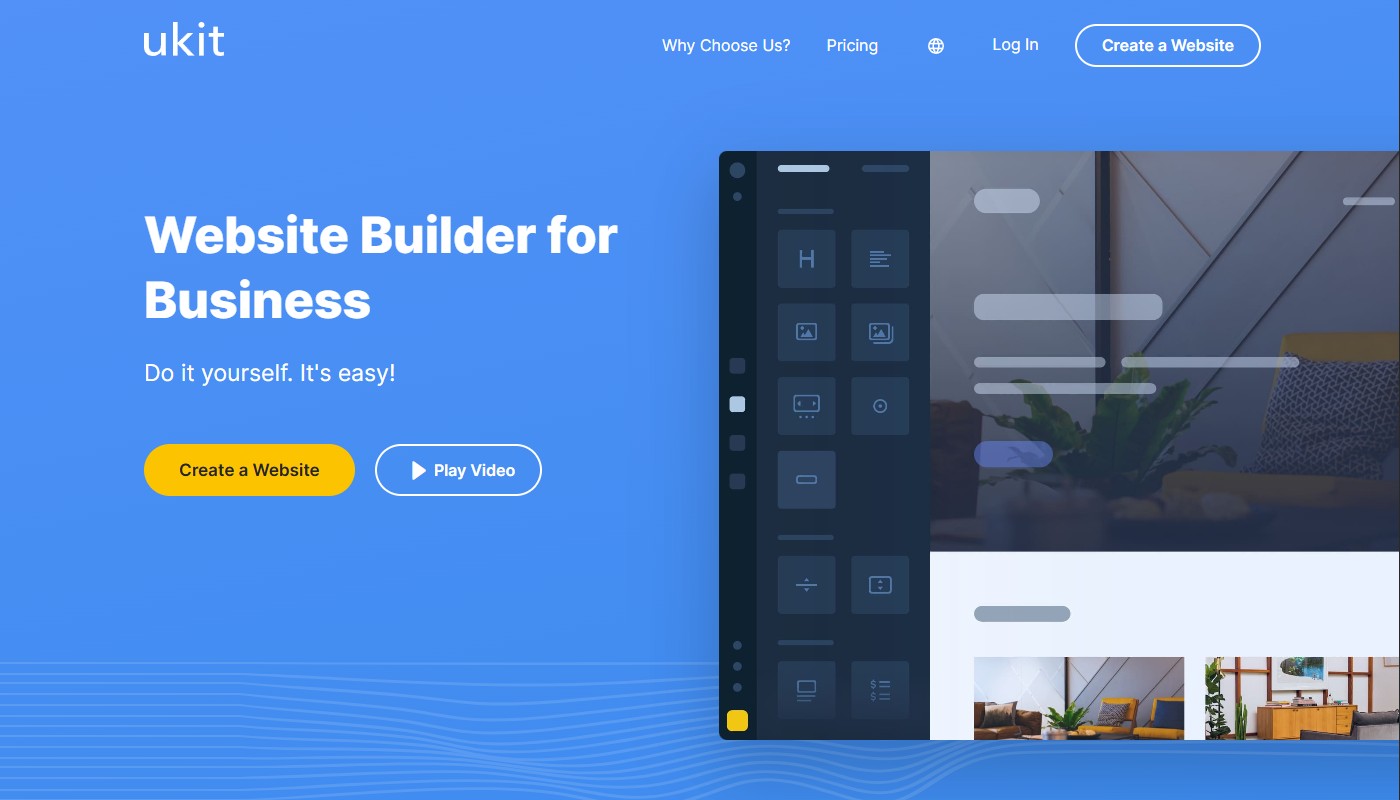
One example of a business-oriented website builder is uKit. It is designed mainly for small business websites, landing pages, portfolios, service pages, and simple company sites.
The platform focuses on visual editing and ready-made layouts. This means users can build pages by working with blocks rather than code. For a business owner, this is useful because the process feels closer to editing a presentation than managing a technical website.
uKit can be a good fit for websites that need:
a homepage with a clear offer;
service descriptions;
contact forms;
portfolio sections;
customer testimonials;
pricing blocks;
basic blog or content pages;
mobile-friendly layouts.
For a small company, these elements often cover most of the website’s practical needs.
What Makes uKit Useful for Business Websites
The main strength of uKit is simplicity. It does not try to turn every user into a developer. Instead, it gives a structured environment for building a clean and understandable website.
Templates help speed up the process, while visual editing makes it easier to adjust content. This can be helpful for businesses that do not want to start from a blank page.
Another useful point is that uKit websites can be adapted for different industries. A consultant, cleaning company, repair service, designer, tutor, small agency, or local shop can all use the same basic logic: present the service clearly, explain benefits, show trust signals, and make contact easy.
The platform is not meant to replace complex custom development, but it can be enough for many standard business websites.
When a Website Builder Is the Right Choice
A website builder is usually a good choice when the website has a clear and simple purpose. For example, the business needs to explain services, show examples of work, collect leads, publish contact details, or support a local marketing campaign.
It is also a good option when the budget is limited, the launch deadline is short, or the business owner wants to manage basic updates independently.
However, if the project requires complex user accounts, advanced databases, custom dashboards, unusual payment logic, or deep software integrations, a custom development approach may be better.
The right decision depends on the task. A simple business website does not always need a complex technical foundation.
How Website Builders Can Work With Extra Website Tools
A website builder gives the site its main structure, but the website can still become more interactive with additional tools. For example, a business can add online calculators, quote forms, booking widgets, surveys, or lead-generation forms.
This is where platforms like uKit can work well together with external website applications. The website builder handles the page layout, while embedded tools help visitors calculate prices, request quotes, choose services, or send more detailed information.
For many small businesses, this combination is practical: the website remains easy to manage, but it can still include useful interactive elements.
Conclusion
Website builders are a smart option for many business websites because they save time, reduce technical complexity, and make future edits easier. They are especially useful when a company needs a clear, professional online presence without investing in a fully custom website from the beginning.
uKit is a good example of this approach. It offers a simple visual environment for creating small business websites, landing pages, portfolios, and service pages. It is not a replacement for complex custom development, but it can be a practical solution for companies that need to launch quickly and manage their site without technical stress.
For businesses that need more functionality, a builder-based website can also be expanded with calculators, forms, widgets, and other interactive tools. This makes the website not only easier to launch, but also more useful for visitors.